Buy vdsl.eu ?
We are moving the project
vdsl.eu .
Are you interested in purchasing the domain
vdsl.eu ?
domain@kv-gmbh.de · 0541-91531010
Buy vdsl.eu ?
Is there a definition for adjacent angles? What distinguishes adjacent angles, supplementary angles, and adjacent angles?
Yes, there is a definition for adjacent angles. Adjacent angles are two angles that share a common vertex and a common side, but do not overlap. Supplementary angles are two angles whose measures add up to 180 degrees, while adjacent angles are two angles that share a common side and vertex. The key distinction between adjacent angles and supplementary angles is that supplementary angles do not have to share a common side or vertex. **
What are alternate angles and corresponding angles?
Alternate angles are a pair of angles that are formed when a straight line intersects two other lines. They are located on opposite sides of the transversal and are equal in measure. Corresponding angles are a pair of angles that are formed when a transversal intersects two parallel lines. They are located in the same relative position at each intersection and are equal in measure. Both alternate angles and corresponding angles are important concepts in geometry and are used to solve problems involving parallel lines and transversals. **

Similar search terms for Angles
Top-Angebote
Products related to Angles:
-
Addison Rugs Machine Washable Indoor/ Outdoor Stripe Angles Chantille RugIntroduce a touch of transitional design with captivating diagonal stripes in varied widths, perfect for any environment. The ultra-thin, flat weave and non-skid backing provide secure placement indoors and outdoors without an additional rug pad.74,99 $*Shipping: 0,00 $Secure redirect to the provider
-
DKNY Pure Angles Indoor only Abstract Area RugLike bustling city lights, the DKNY Pure Angles collection invites energy and movement to your space. Handspun wool is woven into a dense loop pile for a substantial feel underfoot, with space-dyed tonal variations that add an artisanal look.229,00 $*Shipping: 0,00 $Secure redirect to the provider
-
DKNY Pure Angles Indoor only Abstract Area RugLike bustling city lights, the DKNY Pure Angles collection invites energy and movement to your space. Handspun wool is woven into a dense loop pile for a substantial feel underfoot, with space-dyed tonal variations that add an artisanal look.412,00 $*Shipping: 0,00 $Secure redirect to the provider
-
Addison Rugs Machine Washable Indoor/ Outdoor Stripe Angles Chantille RugIntroduce a touch of transitional design with captivating diagonal stripes in varied widths, perfect for any environment. The ultra-thin, flat weave and non-skid backing provide secure placement indoors and outdoors without an additional rug pad.39,99 $*Shipping: 0,00 $Secure redirect to the provider


-
What are vertical angles and adjacent angles?
Vertical angles are a pair of non-adjacent angles formed by two intersecting lines. They are always congruent, meaning they have the same measure. Adjacent angles are a pair of angles that share a common side and a common vertex, but do not overlap. In other words, they are side by side and do not share any interior points. **
-
What is the difference between interior angles and exterior angles?
Interior angles are the angles formed inside a polygon, while exterior angles are the angles formed outside a polygon. The sum of the interior angles of a polygon is always constant and can be calculated using the formula (n-2) * 180 degrees, where n is the number of sides of the polygon. The sum of the exterior angles of any polygon is always 360 degrees. **
-
Determine all angles when...
Determine all angles when a triangle has side lengths of 3, 4, and 5. Using the Pythagorean theorem, we can determine that this is a right-angled triangle. Therefore, the angles are 90 degrees, 30 degrees, and 60 degrees. **
-
What are interior angles?
Interior angles are the angles formed inside a polygon at each of its vertices. They are the angles between two sides of a polygon, and their sum in a polygon with n sides is equal to (n-2) * 180 degrees. Interior angles are important in geometry and are used to calculate various properties of polygons, such as the number of sides or the measure of other angles. **


How are angles named?
Angles are named based on the relationship between the rays that form them. The most common way to name an angle is by using three points, with the middle point representing the vertex of the angle. For example, an angle can be named as ∠ABC, where A and C are the endpoints of the rays that form the angle, and B is the vertex. Another way to name angles is by using a number or letter to represent the angle itself, such as ∠1 or ∠x. **
How can one recognize which angles they are? I mean vertical angles, adjacent angles, etc. And how do you calculate angles α, β, γ, and so on?
One can recognize different types of angles by their position and relationship to each other. Vertical angles are opposite each other when two lines intersect, adjacent angles share a common side and vertex, and complementary angles add up to 90 degrees. To calculate angles α, β, γ, and so on, one can use the properties of the specific type of angle and the given information about the angles or sides of the shape. For example, to calculate the measure of an angle in a triangle, one can use the fact that the sum of all angles in a triangle is 180 degrees. **
Top-Angebote
Products related to Angles:
-
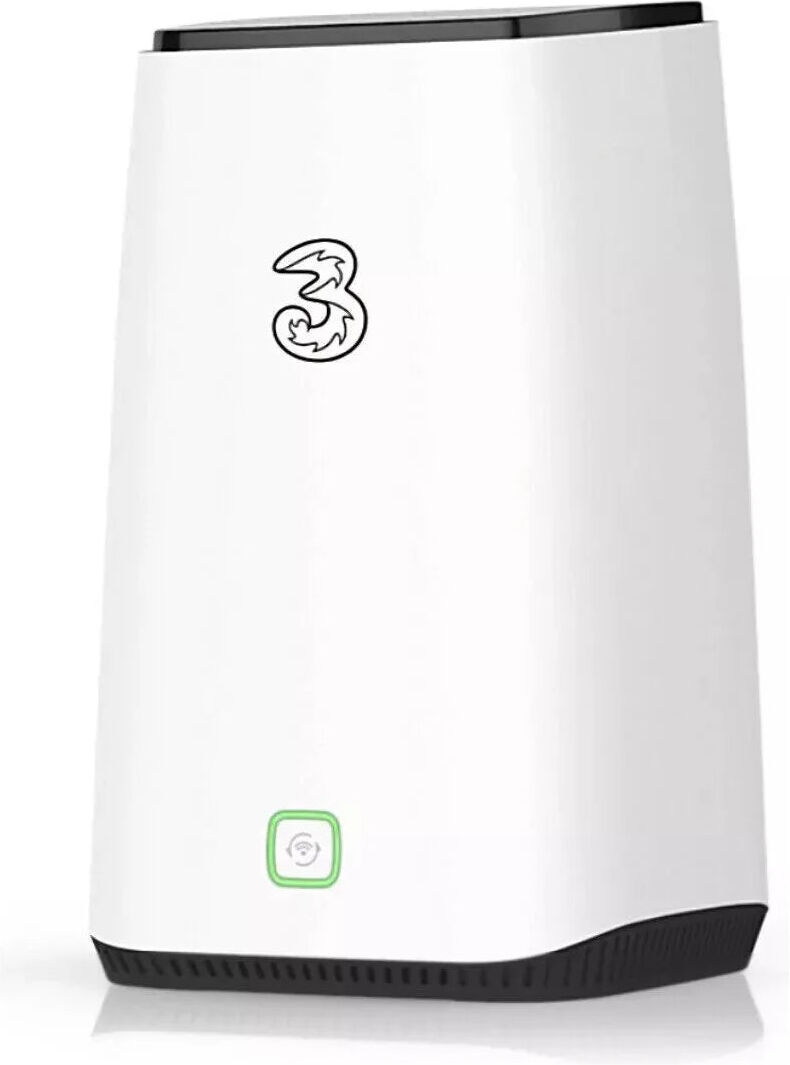
Zyxel NR5103 5G Indoor CPE Router – High-Speed Wireless Broadband Router – 3G Network Locked, Used - Very GoodOverview The Zyxel NR5103 5G Indoor CPE Router is a powerful next-generation broadband solution designed to deliver ultra-fast internet connectivity for homes and small offices. Supporting advanced 5G mobile broadband technology , this router provides reliable high-speed internet without the need for fixed-line connections. With strong wireless coverage, multiple connectivity options, and robust performance, the Zyxel NR5103 ensures smooth streaming, online gaming, video conferencing, and everyday browsing. This model is 3G network locked , making it suitable for use with compatible network providers. Key Features 5G Mobile Broadband Support – Experience high-speed internet connectivity using advanced 5G technology. Reliable Indoor CPE Router – Designed for stable home or office broadband connectivity. Dual-Band Wi-Fi – Provides strong wireless coverage for multiple devices. High-Speed Ethernet Ports – Connect wired devices such as desktops, smart TVs, and gaming consoles. Plug-and-Play Setup – Simple installation without complex configuration. Multiple Device Connectivity – Supports smartphones, laptops, tablets, and smart home devices simultaneously. Optimised Signal Performance – Built-in antennas help improve reception and network stability. Compact Indoor Design – Space-saving router suitable for home or office environments. Advanced Security Features – Helps protect your network and connected devices. 3G Network Locked – Works with compatible supported networks. Benefits The Zyxel NR5103 5G Indoor Router provides an excellent alternative to traditional broadband connections, delivering fast and reliable internet through mobile networks. This makes it ideal for locations where fibre or fixed-line broadband may not be available or where users require flexible internet access. With strong wireless coverage and support for multiple devices, the router ensures stable connections for households and small businesses. Whether streaming high-definition video, working remotely, gaming online, or connecting smart home devices, the Zyxel NR5103 offers dependable high-speed connectivity. Its simple plug-and-play setup makes it easy to install and start using immediately, while advanced security features help protect your network from potential threats. Specifications Specification Details Brand Zyxel Model NR5103 EAN / Barcode [Ean] Network Technology 5G / 4G LTE Network Lock 3G Network Locked Wi-Fi Dual-Band Wi-Fi Ethernet Ports Multiple Gigabit LAN Ports Connectivity Wi-Fi, Ethernet Antennas Internal High-Gain Antennas Usage Indoor Broadband Router Security Built-in Network Security Power AC Power Adapter Colour White Dimensions Approx. 160 × 120 × 50 mm Weight Approx. 600 g85,00 £*Shipping: 0,00 £Secure redirect to the provider
-
DKNY Pure Angles Indoor only Abstract Area RugLike bustling city lights, the DKNY Pure Angles collection invites energy and movement to your space. Handspun wool is woven into a dense loop pile for a substantial feel underfoot, with space-dyed tonal variations that add an artisanal look.229,00 $*Shipping: 0,00 $Secure redirect to the provider
-
Addison Rugs Machine Washable Indoor/ Outdoor Stripe Angles Chantille RugIntroduce a touch of transitional design with captivating diagonal stripes in varied widths, perfect for any environment. The ultra-thin, flat weave and non-skid backing provide secure placement indoors and outdoors without an additional rug pad.74,99 $*Shipping: 0,00 $Secure redirect to the provider
-
DKNY Pure Angles Indoor only Abstract Area RugLike bustling city lights, the DKNY Pure Angles collection invites energy and movement to your space. Handspun wool is woven into a dense loop pile for a substantial feel underfoot, with space-dyed tonal variations that add an artisanal look.229,00 $*Shipping: 0,00 $Secure redirect to the provider
-
Is there a definition for adjacent angles? What distinguishes adjacent angles, supplementary angles, and adjacent angles?
Yes, there is a definition for adjacent angles. Adjacent angles are two angles that share a common vertex and a common side, but do not overlap. Supplementary angles are two angles whose measures add up to 180 degrees, while adjacent angles are two angles that share a common side and vertex. The key distinction between adjacent angles and supplementary angles is that supplementary angles do not have to share a common side or vertex. **
-
What are alternate angles and corresponding angles?
Alternate angles are a pair of angles that are formed when a straight line intersects two other lines. They are located on opposite sides of the transversal and are equal in measure. Corresponding angles are a pair of angles that are formed when a transversal intersects two parallel lines. They are located in the same relative position at each intersection and are equal in measure. Both alternate angles and corresponding angles are important concepts in geometry and are used to solve problems involving parallel lines and transversals. **
-
What are vertical angles and adjacent angles?
Vertical angles are a pair of non-adjacent angles formed by two intersecting lines. They are always congruent, meaning they have the same measure. Adjacent angles are a pair of angles that share a common side and a common vertex, but do not overlap. In other words, they are side by side and do not share any interior points. **
-
What is the difference between interior angles and exterior angles?
Interior angles are the angles formed inside a polygon, while exterior angles are the angles formed outside a polygon. The sum of the interior angles of a polygon is always constant and can be calculated using the formula (n-2) * 180 degrees, where n is the number of sides of the polygon. The sum of the exterior angles of any polygon is always 360 degrees. **
Similar search terms for Angles
-
DKNY Pure Angles Indoor only Abstract Area RugLike bustling city lights, the DKNY Pure Angles collection invites energy and movement to your space. Handspun wool is woven into a dense loop pile for a substantial feel underfoot, with space-dyed tonal variations that add an artisanal look.412,00 $*Shipping: 0,00 $Secure redirect to the provider
-
Addison Rugs Machine Washable Indoor/ Outdoor Stripe Angles Chantille RugIntroduce a touch of transitional design with captivating diagonal stripes in varied widths, perfect for any environment. The ultra-thin, flat weave and non-skid backing provide secure placement indoors and outdoors without an additional rug pad.39,99 $*Shipping: 0,00 $Secure redirect to the provider
-
Addison Rugs Machine Washable Indoor/ Outdoor Stripe Angles Chantille RugIntroduce a touch of transitional design with captivating diagonal stripes in varied widths, perfect for any environment. The ultra-thin, flat weave and non-skid backing provide secure placement indoors and outdoors without an additional rug pad.102,49 $*Shipping: 0,00 $Secure redirect to the provider
-
Addison Rugs Machine Washable Indoor/ Outdoor Stripe Angles Chantille RugIntroduce a touch of transitional design with captivating diagonal stripes in varied widths, perfect for any environment. The ultra-thin, flat weave and non-skid backing provide secure placement indoors and outdoors without an additional rug pad.445,49 $*Shipping: 0,00 $Secure redirect to the provider
-
Determine all angles when...
Determine all angles when a triangle has side lengths of 3, 4, and 5. Using the Pythagorean theorem, we can determine that this is a right-angled triangle. Therefore, the angles are 90 degrees, 30 degrees, and 60 degrees. **
-
What are interior angles?
Interior angles are the angles formed inside a polygon at each of its vertices. They are the angles between two sides of a polygon, and their sum in a polygon with n sides is equal to (n-2) * 180 degrees. Interior angles are important in geometry and are used to calculate various properties of polygons, such as the number of sides or the measure of other angles. **
-
How are angles named?
Angles are named based on the relationship between the rays that form them. The most common way to name an angle is by using three points, with the middle point representing the vertex of the angle. For example, an angle can be named as ∠ABC, where A and C are the endpoints of the rays that form the angle, and B is the vertex. Another way to name angles is by using a number or letter to represent the angle itself, such as ∠1 or ∠x. **
-
How can one recognize which angles they are? I mean vertical angles, adjacent angles, etc. And how do you calculate angles α, β, γ, and so on?
One can recognize different types of angles by their position and relationship to each other. Vertical angles are opposite each other when two lines intersect, adjacent angles share a common side and vertex, and complementary angles add up to 90 degrees. To calculate angles α, β, γ, and so on, one can use the properties of the specific type of angle and the given information about the angles or sides of the shape. For example, to calculate the measure of an angle in a triangle, one can use the fact that the sum of all angles in a triangle is 180 degrees. **
* All prices are inclusive of VAT and, if applicable, plus shipping costs. The offer information is based on the details provided by the respective shop and is updated through automated processes. Real-time updates do not occur, so deviations can occur in individual cases. ** Note: Parts of this content were created by AI.